|
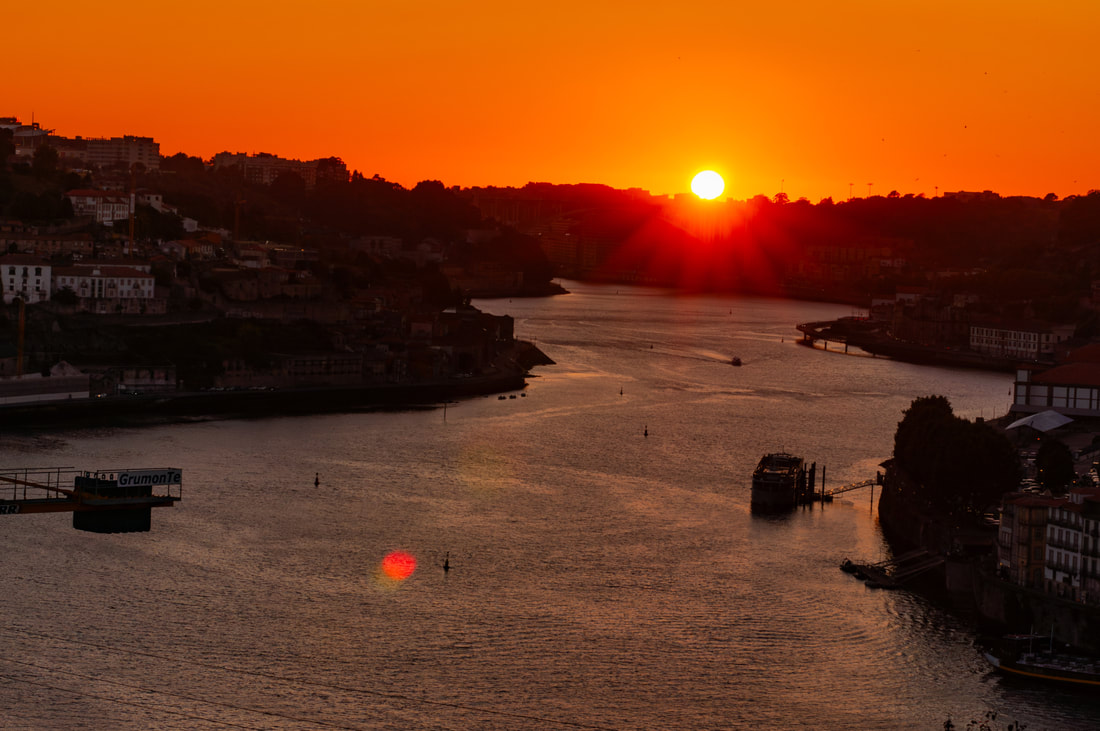
As the sun tilts westward, a low, oblique radiance sweeps across the South Rim, awakening the Grand Canyon in a rising tide of color—ochres kindling into flame, purples deepening like half‑remembered dreams, and sudden golds flickering along the snow‑rimmed terraces. In this charged hour before sunset, the canyon ceases to be mere geology and becomes a vast, breathing codex: a living archive where each stratum holds the memory of vanished seas, wandering peoples, and the long imagination of the Earth itself.
Winter’s first light haunts the snow‑dusted stratigraphy of Mather Point, revealing the Grand Canyon as a vast, radiant manuscript penned in the primordial dawn of stone.
December's blue hour paints the South Rim's skies with soft pastel pinks and icy hues of wintry blues. Enjoy this gallery of recent scenic winter landscapes of Grand Canyon National Park captured during blue hour, showcasing pink‑and‑blue horizon hues, snow‑covered canyon vistas, and the iconic Hopi Point overlook along the South Rim in Arizona.
"These fleshly sensoria which we call self are ephemera withering in the blaze of infinity, fleetingly aware of temporary conditions which confine our activities and change as our activities change. If you must label the absolute, use its proper name: Temporary." - THE STOLEN JOURNALS A monochrome chronicle of the Coral Pink Sand Dunes, where the desert moves with the slow, deliberate will of something ancient and half‑sentient. Here, wind is the first architect and sand the ever‑faithful scribe, shaping ridgelines that rise and fall like the breath of a sleeping titan. Stripped of color, the dunes reveal their true nature: a realm of pure form, where shadow becomes prophecy and light inscribes its own scripture across the shifting slopes.
I've recently finished reading Benjamin Labatut's When We Cease to Understand the World. When I discovered this imaginative madman's work it struck me like those ecstatic epiphanies we're fortunately sometimes subject to getting electromagnetically struck and rippled by, at least once or twice in life, or even periodically if we've managed to ritualize the experience. Labatut is deeply interested in the phenomena of epiphany, and his book orbits and spirals around that mysteriously maddening epiphanous moment that have helped some of the grandest mathematical and scientific mind's break into the realm of discovery. Schwarzchild, de Broglie, Heisenberg, Mochizuki, Schrödinger, these are some of the scientific and mathematical luminaries Labatut brings into focus. In one of the book's chapters entitled, Pearls in His Ears, Labatut intriguingly describes how the eminent Nobel Prize-winning physicist, Schrödinger, discovered his reality-shattering wave function. He discovered this equation in a fit of madness while recovering from tuberculosis at a sanatorium in Switzerland. Schroedinger knew it was the discovery he had longed for his entire life, but he had no way of defending it. He had not derived his equation from pre-existing principles. His thinking had not departed from any known basis. The equation itself was a principle, and his mind had pulled it from nothing. It's this story that inspired me to prompt my literary AI agent and prose poet to write what that moment of epiphany might have felt like for Schroedinger. Below is the result of the prompt accompanied with AI-generated quantum visualizations. As Schrödinger sat in the quiet solitude of his thoughts, the boundaries between the tangible world and the abstract began to dissolve. His mind swirled with waves—of energy, of probability, of possibility. What was once a rigid and deterministic view of reality now seemed to fold and unfold like the petals of a delicate flower, each layer revealing an ever-deeper truth. The universe, he realized, was not a static machine, but a fluid dance of potentialities.
It's 2025 and you've managed to blindly stumble into the new year without technologically equipping yourself with industrious, hyper-productive AI agents in any of your life's areas. Fortunately, you've somehow found yourself plopped into this digital place in order to get a sample of what some of my personal AI agents have been busily researching ahead of the new year. I've got many agents helping me to understand the swirl of chaos ominously orbiting around our exponentially informational and wonderful world.
Meet Kali, Chief Executive, Investment, Information, Intelligence Officer (CEIIIO) at Kali Capital. Below is an executive summary of her economic outlook for 2025. You might find it useful. Market Concentration and Economic Outlook for 2025 When we discuss the US stock market's "concentration," we're pointing to the fact that a small number of behemoth companies command a substantial portion of the market's total value. In early 2025, an astonishing 26 stocks encompass half the entire value of the S&P 500 index. This level of concentration is unprecedented, with the top 10 stocks alone constituting a whopping 37.3% of the S&P 500. Such a concentration level hasn't been seen since the index's inception in 1957. Economic Outlook for 2025The economic landscape for 2025 is influenced by a myriad of factors, including the outcomes of the US elections, fiscal policies, and global trade dynamics. The US economy is anticipated to continue its growth trajectory, although at a decelerated pace compared to 2024. The job market remains robust, and consumer spending is healthy, but we may witness a deceleration in new job creation. Proposed tariffs and tighter immigration controls could potentially act as roadblocks to growth. |
Categories
|


RSS Feed